

 Duża dostępność
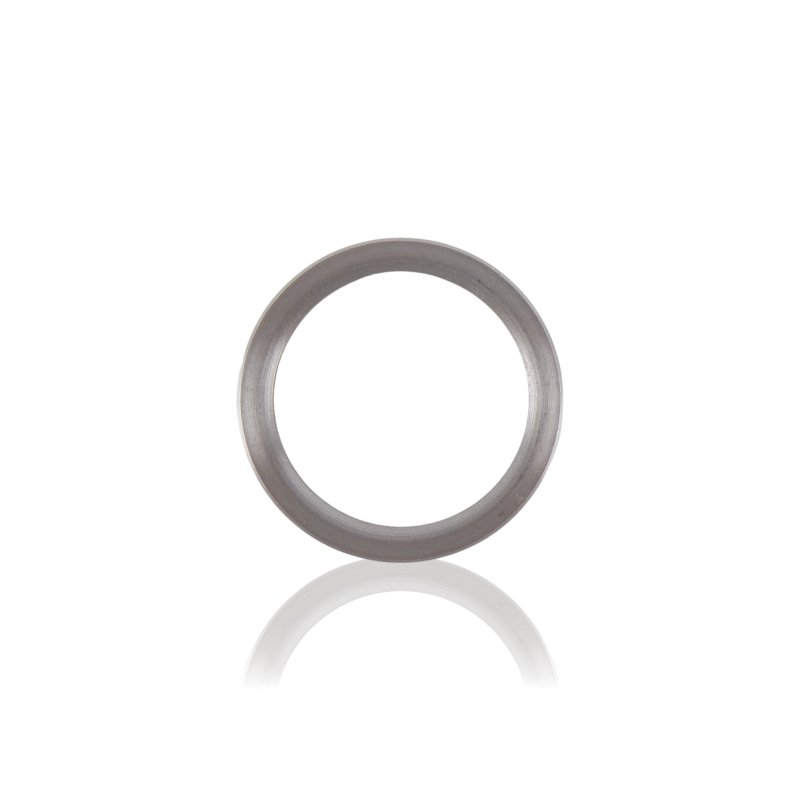
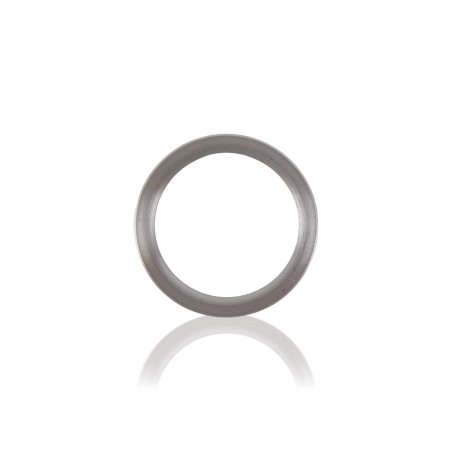
Washer 40513 with a diameter of 32mm, made of stainless steel, is the first component from the cylinder side in the piston spring assembly of the Kranzle pressure washer pump. The assembly sequence in the cylinder is as follows: washer 40513 rests against the bottom of the cylinder seat, the piston spring sits on it, the pressure disc sits on the spring, and the whole assembly is held by the piston secured with a retaining ring. The washer forms a fixed, hard seat for the lower spring coil – on the side that does not move during piston operation.
The washer is seated stationary in the cylinder seat of the pump head. Its function is to transfer the load of the lower spring coil evenly across the cylinder seat surface – without stress concentration at a single point, which could over time bite into the head material. The 32mm diameter against the 36mm external coil diameter of the spring means the washer centrally guides the lower part of the spring in the seat. Stainless steel is structurally justified here: the washer is the first component to come into contact with working water when piston seals leak – ordinary steel in this position corrodes and can seize in the seat.
The primary selection parameters are the 32mm diameter and reference number 40513. Washer 40513 looks similar to pressure discs 40454 (18mm) and 40510 (20mm), but has a noticeably larger diameter and serves a different function – it sits on the cylinder side as a stationary component, while the pressure disc sits on the piston side and moves with it during each stroke. Confusing these components during assembly results in incorrect spring seating and asymmetric piston operation.
When replacing the washer, assess the condition of the piston spring and pressure disc at the same time – all three components work together in the same sequence and wear at a similar rate. With the head already open, replacing the complete set is more practical than returning to the pump a few months later.
Service part for piston pumps of Kranzle pressure washers. Functions as the thrust seat for the piston spring. Verify the association with the specific spring variant on the disassembled pump. Verify the exact compatibility range by reference number 40513 and the 32mm diameter.
Where exactly in the piston assembly does washer 40513 sit – on which side of the spring?|Washer 40513 sits on the cylinder side – first in the sequence, directly in the cylinder seat of the pump head. The piston spring rests on it, the pressure disc rests on the spring at the piston side, and the piston with its retaining ring closes the assembly. The washer is a stationary component – it does not move during piston operation. The pressure disc on the other side of the spring moves with the piston during each stroke.
What are the consequences of confusing the washer with the pressure disc during assembly?|The pressure disc has a diameter of 18mm or 20mm – noticeably smaller than the 32mm washer. Fitting the pressure disc at the bottom of the cylinder seat instead of the washer gives too small a thrust surface for the lower spring coil and may cause the coil to dig into the head material. In the other direction – a 32mm washer cannot be fitted on the piston side as it will not fit in the guide. The difference of 32mm vs 18mm/20mm is visible to the naked eye, but with dirty or similarly appearing components always measure with a calliper.
Why is the washer made of stainless steel?|The washer sits deepest in the cylinder seat and is the first component to come into contact with working water when piston seals leak. Ordinary steel in this position corrodes and would seize in the seat. Stainless steel eliminates both problems. The pressure disc on the piston side operates in a different environment – hence the difference in materials within the same assembly sequence.
How to remove a washer seized in the cylinder seat without damaging the head?|Do not lever the edge with a sharp tool along the seat wall – you risk scoring the sealing surface. Soak the contact area with penetrating fluid and wait several minutes. With an aluminium head, use a fluid safe for aluminium. The stainless steel washer can be pulled out with a small magnet placed centrally – the washer is flat and the magnet holds well if the corrosion is not extreme. After removal, clean the cylinder seat of deposits.
[/faq]
Model
Therm 891 E-ST 48
Model
Primus 1200 TST
Model
W 19/160
Model
D 26/250 TST
Model
Primus 1200 TS AT
Model
Quadro 1500 TS
Model
D 30/180 TST
Model
Profi-Jet B 16/220
Model
Quadro 1500 TST
Model
Profi-Jet B 16/220 T
Model
WS 800 TS
Model
Profi-Jet B 20/200
Model
Bully 1180 T
Model
Profi-Jet B 20/200 T
Model
Bully 1180 TST
Model
Quadro 1000 TST
Model
Profi-Jet B 16/250
Model
Therm 890
Model
Quadro 1200 TST
Model
Bully 1000
Model
Therm 1160
Model
Therm 895-1
Model
Bully 1200
Model
Therm 1525-1
Model
Therm 1165-1
Model
Therm 895
Model
Profi-Jet B 230 T
Model
Quadro 800 TST
Model
Therm 1165
Model
Profi-Jet B 240 T
Model
Profi-Jet B 16/250 T
Model
Bully 980 TS
Model
Profi-Jet B 270 T
Model
Quadro 1000 TS
Model
Bully 980 TST
Model
WS 1000 TS
Model
Quadro 1200 TS
Model
W 11/135
Model
WS 1200 TS
Model
Primus 1000 TST
Model
W 13/230
Model
Therm 895 ST
Model
Therm 1165 ST
Model
Primus 1000 TS AT
Model
W 15/200