

Authorised distributor
 Ostatnie sztuki!
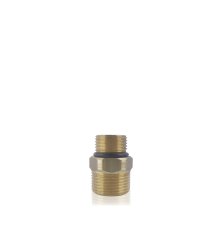
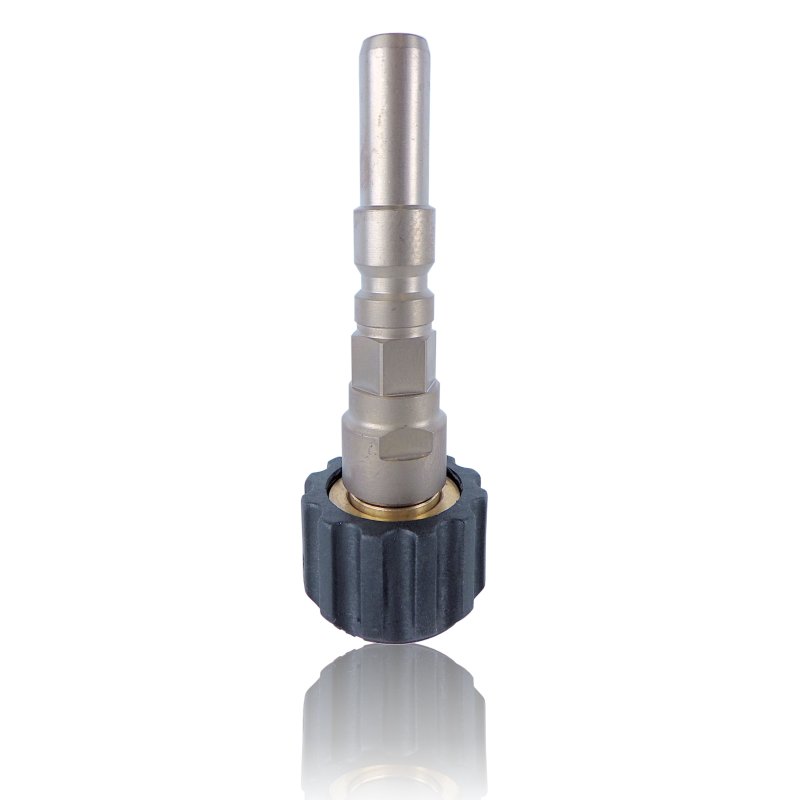
The D12 plug > M22×1.5 female quick coupling with anti-twist protection is an accessory connection component that combines the D12 quick-connect standard (plug) with an M22×1.5 female thread (internal thread). The Twist Stop version is designed to reduce transfer of hose twist into the connection, which stabilizes accessory handling and reduces stress on the joint during maneuvering.
MPN / reference: 124415
Standard: D12 (plug)
Thread: M22×1.5 female
Version: with anti-twist protection
The quick coupling is used in typical service and assembly work:
Consider replacing the quick coupling when you notice:
Selection should be unambiguous:
For quick couplings, matching the standard and type (plug/socket) is critical - similar-looking parts may not mate correctly.
Select the quick coupling based on the D12 (plug) standard and the M22×1.5 female thread, according to the accessory requirements in the specific setup. The anti-twist version is chosen where hose twisting loads the connection and makes work harder. Best confirmation is by MPN 124415 and comparison with the removed part.
[faq]
What does the anti-twist feature do in real washer use?|It reduces how much hose twist is transferred into the coupling. The hose “wraps up” less during maneuvering, and the joint is less prone to loosening and micro-leaks.
Does the anti-twist element solve a hose that’s hard to rotate?|It often helps, but if the hose is old, has damaged reinforcement, or is permanently twisted, the end fitting alone won’t restore full freedom of movement. In that case, assess the hose condition.
How do I know I need a D12 plug and not a D12 socket?|Most reliably by comparing with the removed part: a plug inserts into a socket. If your setup already has a D12 socket, you need a plug-and vice versa.
Does M22×1.5 “female” mean an internal thread?|Yes. Female means an internal thread. In this variant, the threaded side is M22×1.5 female.
Why can the connection leak even with a new Twist Stop coupling?|Most often due to dirt in the socket, worn/damaged sealing on the mating component, or misaligned assembly. Also check the condition of the D12 socket and sealing surfaces on both sides of the joint.
[/faq]
Connector
QuickConnector D12
Connector
M22