

 Ostatnie sztuki!
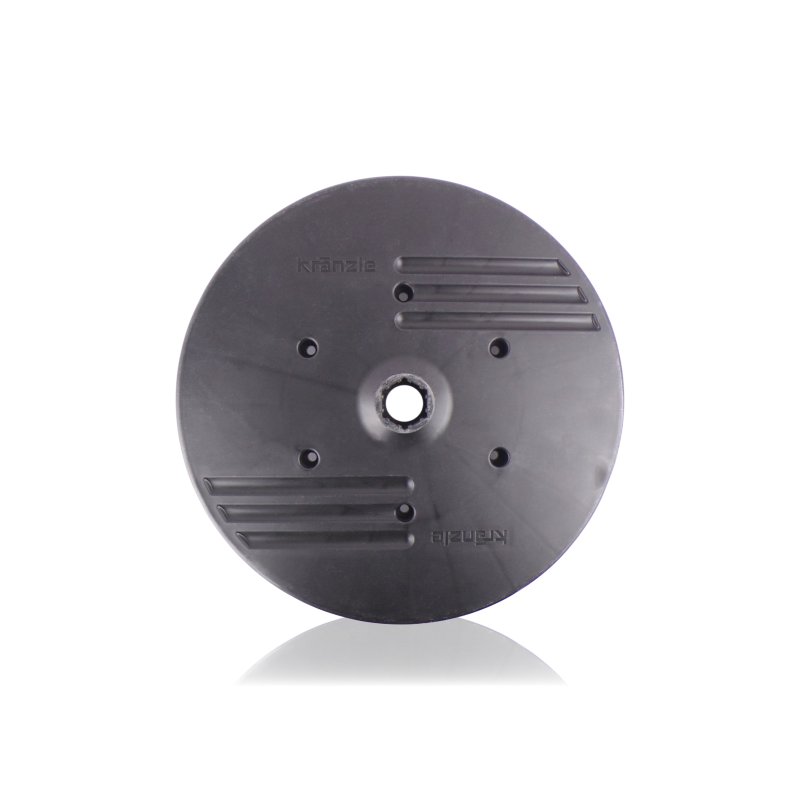
In a hose drum, the side plate defines the boundary of the winding and keeps the hose within the proper working range. If the component is cracked, bent or has damaged mountings, the hose may wind unevenly, extend beyond the drum outline or place improper load on the remaining parts of the reel.
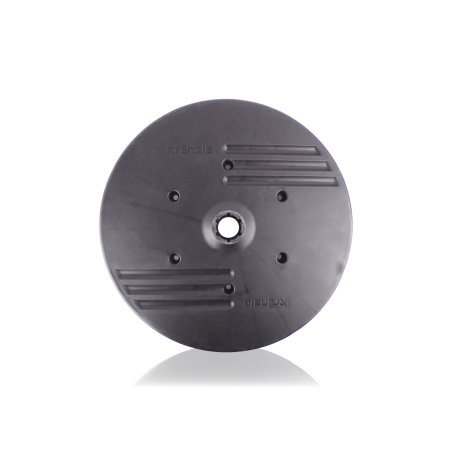
The fi 270 mm side plate works as part of the drum assembly responsible for lateral support of the hose winding. Its task is to maintain the correct outline of the drum, limit the hose from slipping sideways and preserve proper geometry during winding and unwinding.
In service practice, this component is replaced after mechanical damage, cracks near the mounting area, edge deformation or when the drum no longer guides the hose evenly. The problem does not always come from the hose itself or from the drum axle - a damaged side plate can also cause skewed winding, rubbing and uneven operation of the entire mechanism.
This part is especially important in workshop and service equipment, where the hose is frequently unwound under load and rewound after work in varying conditions. The side plate must retain its shape, because deformation changes the way the hose is arranged on the drum.
When selecting a drum side plate, the basic parameter is the fi 270 mm diameter, but the profile shape, mounting method and compatibility with the specific drum design are also important. It is worth comparing the new part with the removed component, paying attention to the outline, mounting holes and the way it works with the axle or the reel body.
Before installation, it is worth checking:
Accurate fit is important, because a plate with a similar diameter but a different profile or mounting layout may not guide the hose correctly or may create stress in the whole assembly.
Compatibility of this part should be assessed according to the specific drum, not only by the outer diameter. Correct fit is determined by the 270 mm diameter, geometry of the side plate, arrangement of mountings and the way it connects with the remaining reel components. In drum parts, even a small profile difference may change the way the hose winds and affect the operation of the entire assembly.
[faq]
Can the drum side plate be selected only by the fi 270 mm diameter?|No. The diameter is crucial, but the part profile, mounting layout and the way it connects to the specific drum must also be checked.
What can uneven hose winding on the drum mean?|The cause may be a damaged side plate, a skewed axle, a worn drum support or excessive play in the mechanism. It is worth checking the whole assembly, not only the hose itself.
Does a cracked edge of the side plate matter during drum operation?|Yes. A damaged edge may guide the hose worse, cause it to slip sideways or create a rubbing point during winding.
What should be checked if the new plate runs with wobble after installation?|The drum alignment, condition of the mounting points, order of spacer elements and whether the other side of the drum is deformed should be checked.
Is it worth checking the other side of the drum when replacing the side plate?|Yes. If one plate was damaged by impact, overload or skewed winding, the other side of the drum may also have taken part of the load.
[/faq]
Model
Profi 160 TST
Model
Profi 175 TST
Model
Profi 195 TST
Model
Quadro 9/170 TST
Model
Quadro 11/140 TST
Model
Bully 1000
Model
Bully 1200
Model
Bully 980 TS
Model
Bully 980 TST
Model
Bully 1180 T
Model
Bully 1180 TST
Model
Quadro 12/150 TST
Model
Profi 15/120 TST
Model
Quadro 799 TST
Model
Quadro 599 TST
Model
Quadro 899 TST