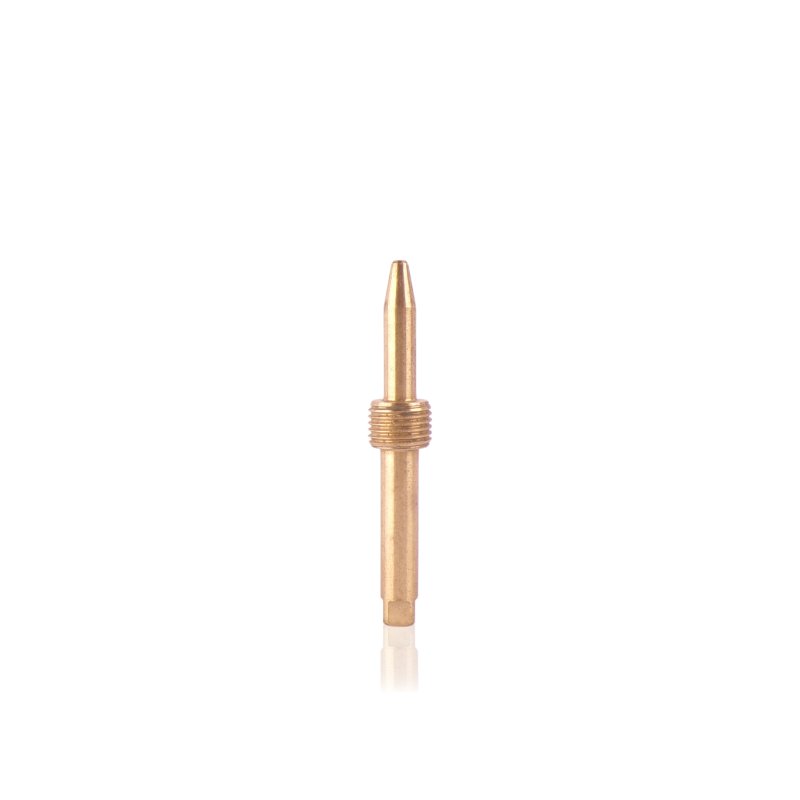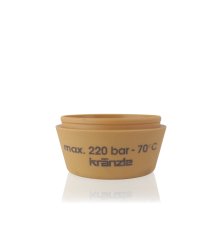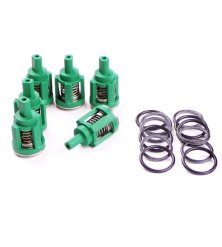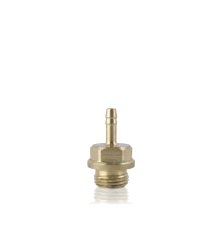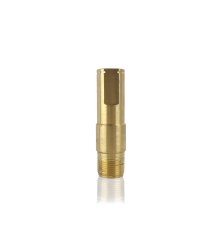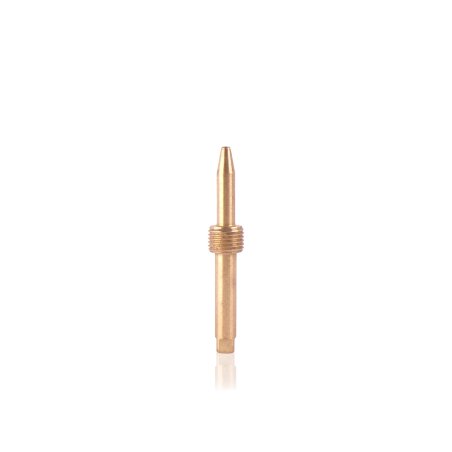
The MPN 46601 valve needle is the precision regulating pin inside the complete detergent dosing valve on Kränzle therm-RP pressure washers. Moving against the seat in the angle valve body, it regulates the amount of detergent drawn in during low-pressure operation.
Application
The needle is part of the detergent dosing valve (angle valve), fitted at the water inlet of the therm-RP 1000, 1200, 1400 and 1600 (D12) pressure washers. Turning the knob on the valve moves the needle along the body's axis – the further the needle extends out of the seat, the more detergent is drawn into the water stream. This component is in direct contact with the drawn-in detergent, making it a critical point in the whole dosing system.
Symptoms – when to replace
- The valve knob turns, but the amount of detergent drawn in doesn't change – the needle isn't responding to adjustment
- Stuck or stiff-moving needle – usually the result of dried detergent around the pin
- Detergent or water leaking at the needle-to-body joint
- Stripped or worn thread on the pin, so the knob turns but no longer moves the needle
- No detergent suction despite an open valve and a sound suction hose
How to choose the right part
- By reference number: 46601
- By unit model: therm-RP 1000, therm-RP 1200, therm-RP 1400, therm-RP 1600 (D12)
- By its position in the assembly – the needle is an internal part of the complete dosing valve (MPN 46616), not a standalone valve body
- By comparison with the removed needle – the pin length and thread condition should match the original, so the knob presses the needle against the seat correctly
- If the seal (6 mm Parbaks, item 34) or O-ring (item 35) is also worn besides the needle itself, it's worth replacing them together – a leak is often the result of both components wearing out at the same time
[faq]
Is replacing the needle alone enough, or does the valve seal need replacing at the same time?|It depends on the cause of the fault. If the problem is only a lack of response to adjustment (e.g. a damaged pin thread), the needle alone solves it. If there's a leak at the joint, in most cases the 6 mm Parbaks seal (item 34) or the O-ring (item 35) is also worn – it's worth checking both components during disassembly.
How can I tell a leaking needle apart from a leaking valve body?|A leak at the needle itself usually appears where the pin exits the body, and it changes depending on the knob position. A leak from the valve body (Grundteil Eckventil, MPN 46608) occurs regardless of the knob setting and indicates a crack or damage to the body itself, not the needle.
Does the regulating knob need to be replaced together with the needle?|Not always. The knob (MPN 46609) is a separate component, fitted onto the needle from the outside. If the knob itself isn't cracked or its mounting socket isn't worn out, only the needle can be replaced, with the existing knob fitted back onto it.
What should I do if the needle is stuck with dried detergent?|A stuck needle often doesn't need immediate replacement – it's worth first disassembling the valve and cleaning the deposit off the pin and seat. Only if the needle still moves stiffly or the thread is damaged after cleaning is replacing it with a new one warranted.
[/faq]