




 Mała ilość
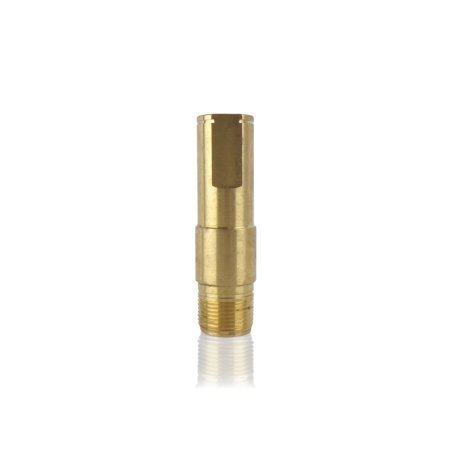
Brass rotary connector 40323 operates in the rotation axis of the Kranzle pressure washer hose reel. It transfers water under working pressure between the fixed connection of the washer and the rotating drum – without twisting the hose during winding and unwinding.
The connector is mounted centrally in the rotation axis of the hose reel. One side is connected to the fixed water installation of the washer, the other rotates together with the drum. Continuous flow of working water under pressure takes place between these surfaces. The brass construction provides resistance to pressure and working conditions typical for pressure washers.
Service part – installed during hose reel repair after damage or wear of the existing connector.
Identify exclusively by reference number 40323. In the Kranzle hose reel assembly, the rotary connector may be available as a separate body, separate spindle, or complete set. If you are unsure whether 40323 is a standalone component or a set – check before purchasing by comparing with the removed part.
When replacing the connector, assess the condition of the retaining ring and spacer ring at the same time – replacing them with the assembly open is straightforward and prevents re-disassembly.
Service part for Kranzle pressure washers equipped with a hose reel. Verify the exact compatibility range by reference number 40323.
How to distinguish a leak from the connector from a leak from the bearing block?|A leak from the rotary connector appears at the drum axis – where the drum connects to the water supply – and is intensified by working pressure. Leaks from bearing blocks (40305, 40306) concern the drum journals on the sides of the structure and are usually not directly related to water pressure. During diagnosis, move the hose aside and observe exactly where the water appears.
Can a brass connector be reconditioned by polishing, or is replacement necessary?|Brass responds well to mechanical processing – shallow scratches on sealing surfaces can be smoothed out. With deep corrosion, thread damage or pitting from hard water, reconditioning is unreliable and replacement is the safer option. In hard water environments the connector corrodes faster – it is worth shortening the inspection interval.
In what order should the connector be disassembled to avoid damaging the drum shaft?|Before disassembly, drain the drum of water and cut off the pressure. If the component is blocked by limescale deposits, soak it in a descaling agent before attempting disassembly. Record the orientation and sequence of all components.
When replacing connector 40323, is it necessary to replace other components of the drum assembly?|There is no obligation to do so, but with the assembly open it is worth checking the retaining ring, spacer ring and brass washer. These components work together with the connector and may be worn to a similar degree. If the drum has been in use for a long time or heavily, also assess the condition of the bearing blocks – runout or lateral play of the drum indicates their wear independently of the connector.
[/faq]
Model
Therm-RP 1600 T
Model
Therm 715
Model
Therm-RP 1000 AT
Model
Therm 870-1
Model
Therm-RP 1200 AT
Model
Therm 1525-1
Model
Therm 895-1
Model
Therm-RP 1400 AT
Model
Therm 1165-1
Model
Therm-RP 1600 AT
Model
Therm 1017 T
Model
E-Therm 500 M 18 T
Model
Therm-RP 1400 T
Model
Therm-RP 1200 T
Model
E-Therm 500 M 24 T
Model
Primus 1000 TST
Model
E-Therm 603 M 36 T
Model
Primus 1000 TS AT
Model
E-Therm 873 M 36 T
Model
Primus 1200 TST
Model
E-Therm 873 M 48 T
Model
Primus 1200 TS AT
Model
Therm 602 E-M 18
Model
LX-RP 1000 TST
Model
Therm 602 E-M 24
Model
LX-RP 1200 TST
Model
Therm 602 E-M 36
Model
LX-RP 1400 TST
Model
Therm 872 E-M 48
Model
LX-RP 1600 TST
Model
Therm 635-1
Model
Therm-RP 1000 T
Model
Therm 875-1

