

Authorised distributor
 Duża dostępność
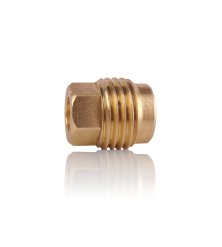
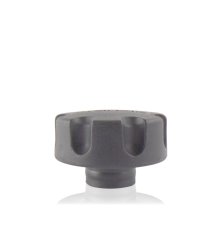
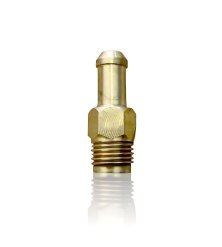
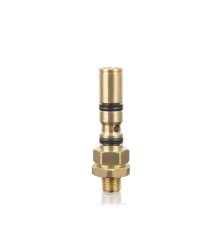
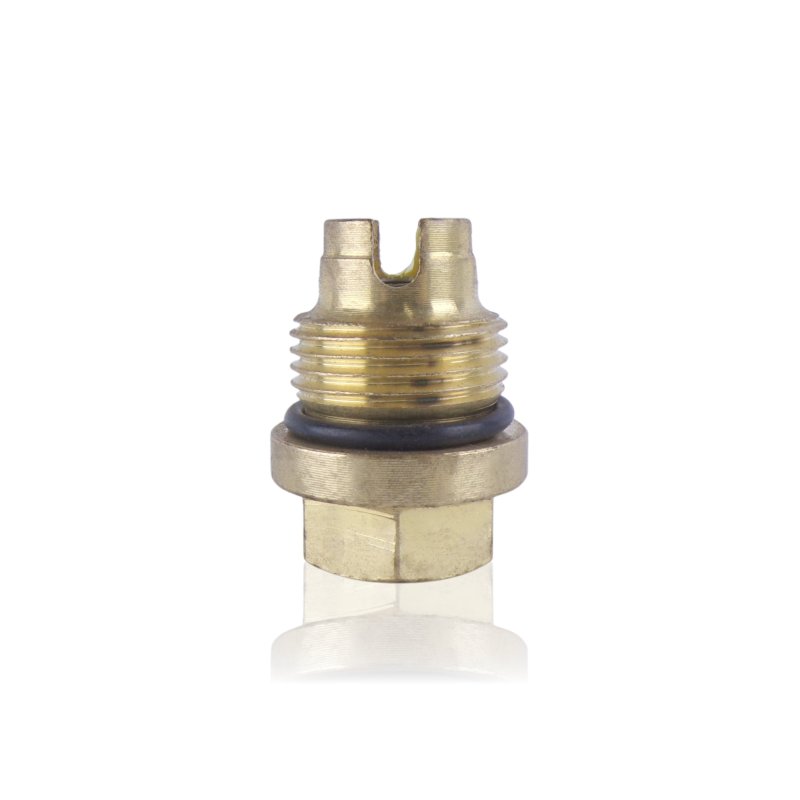
Plug 40591 is a component of the Kranzle pressure washer pump valve block combining two functions in one body: a check valve mechanism and a port for connecting a pressure gauge. The check valve prevents water from flowing back into the cylinder after the delivery stroke. The gauge port allows working pressure to be measured at this point in the circuit without dismantling the pump – simply connect a gauge to the seat and read the pressure with the washer running. The plug without this port is a separate part with a different reference number – 40591 is used where pressure measurement or monitoring in the valve block is required.
The plug is mounted in the valve block bore of the pump, at a position where both a check valve and access for pressure measurement are required. The gauge port in the plug body is a threaded bore that accepts a pressure gauge connection, or is closed with a plug when not in use. It allows pressure to be diagnosed directly in the valve block – without dismantling the hose or accessories and without stopping the pump. This is particularly useful when diagnosing pressure irregularities, when it is necessary to determine whether the problem lies on the pump side or the accessory side.
Replaced when the body is damaged, the check valve mechanism leaks, or the gauge port is damaged and no longer allows a secure gauge connection.
Identify by reference number 40591. The key difference from check valve plugs without a gauge port (e.g. 40522) is the presence of an additional seat in the body – visible as a threaded side or front bore in the plug body. Fitting a plug without a port where 40591 is specified removes the ability to measure pressure at that point; fitting 40591 where a plain plug was used is geometrically possible, but requires the gauge port to be blanked off with a plug to prevent leakage.
Before ordering, identify the thread type of the gauge port on the removed plug – Kranzle gauges may have a specific connection thread. Using a gauge with an incompatible thread risks damaging the port.
Component of the valve block for Kranzle pressure washer pumps. Verify the exact compatibility range by reference number 40591. Not a substitute for check valve plugs without a gauge port – it serves an additional diagnostic function.
What is the gauge port in a check valve plug for, and when is it actually used?|The gauge port allows pressure to be measured directly in the valve block – between the pump and the working circuit – without dismantling the installation. It is used primarily for diagnosis: when the washer does not reach its nominal pressure, connecting a gauge to this port makes it possible to determine whether the problem lies in the pump (pressure already low at the block outlet) or on the accessory and hose side (pressure at the block is correct, loss occurring further downstream). During normal operation the port remains blanked off – connecting a gauge is a service procedure, not a permanent configuration.
How does 40591 differ from check valve plug 40522 – can they be used interchangeably?|Both are check valve plugs, but 40591 has an additional gauge port in the body. Interchangeability depends on the installation position: if diagnostic access is required at a given valve block bore, only 40591 with the port should be used. Fitting 40522 (without port) in that position is geometrically possible, but permanently removes access to pressure measurement. In the other direction – 40591 can be fitted where 40522 was, with the gauge port blanked off – but this creates an unnecessary additional seal with no function. Use each in the position it was designed for.
How to diagnose pressure pulsation using the gauge port of 40591?|Connect a gauge to the port and start the washer with the gun open. Observe the reading at stable engine speed – the gauge needle should hold steady at the nominal pressure for the specific model. Clearly rhythmic gauge fluctuations proportional to pump speed indicate a problem in the valve block – worn check valves or leaking piston seals. A constant, unchanging pressure drop below the nominal value with a stable needle is a different problem – most likely a worn nozzle or incorrect setting of the regulating valve. The gauge port allows these two causes to be separated without further disassembly.
[/faq]
Model
Therm 895
Model
Therm 1165
Model
Therm 755