




 Ostatnie sztuki!
The internal part of the drum is not visible during normal operation, but it is responsible for whether the reel keeps the correct geometry after assembly. If this component is cracked, deformed, or has worn seating points, problems may only appear under load: during hose winding, crank operation, or when the hose winds unevenly.
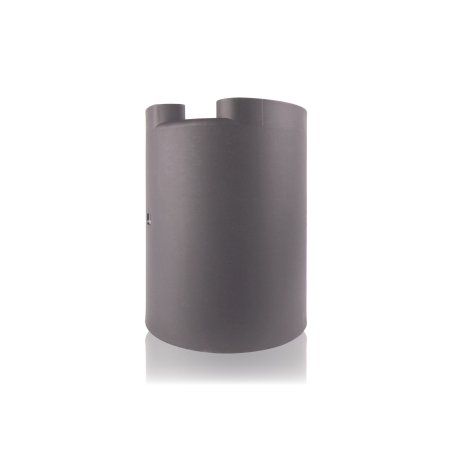
The internal drum housing is used as a structural part of a hose reel. It works between the outer drum elements, axle, side plates, and mountings, maintaining the correct position of the cooperating components. Its task is to stabilize the inside of the assembly and preserve the proper arrangement of parts during rotation.
In service practice, this component is most often replaced when the drum has been disassembled after mechanical damage, works with play, or cannot be reassembled concentrically despite the external parts being in good condition. A damaged internal housing may not be visible immediately, but it can cause the reel to run out of alignment, components to rub, rotation to become harder, or the hose to wind unevenly.
In heavily used drums, the loads are not carried only by the side plates. Internal components also absorb stresses created during hose unwinding, fast rewinding, and operation with the hose pulled under angle.
When selecting the internal drum housing, the most important factor is compatibility with the specific reel design. This type of part must fit not only dimensionally, but also structurally to the axle, side plates, spacer elements, and mounting points.
Before installation, it is worth checking:
Internal drum components require precise fit. A part with a similar outline but a different layout of seats or support points may appear to fit correctly at first, but later cause wobble, stress, or heavy reel operation.
Compatibility of this component should be assessed according to the design of the whole drum, not only by the part name. Correct fit depends on the housing geometry, the layout of internal seats, the way it works with the axle, and its position relative to the side parts of the reel. In the case of internal drum components, external similarity is especially misleading, because the key differences may be on the side that is not visible after assembly.
[faq]
Why can damage to the internal housing be harder to detect than a cracked side plate?|Because the part works inside the drum and is often not visible without disassembly. The symptoms appear indirectly: through reel wobble, play, rubbing, or uneven hose winding.
What should be checked if the drum rotates harder after reassembly than before the repair?|It is worth checking the alignment of the internal housing, the order of the spacers, the position of the side plates, and whether any component has been tightened under stress.
Can a crack in an internal seat affect the position of the side plates?|Yes. If the support point inside the drum is damaged, the outer side plates may sit at the wrong angle after tightening.
When should a problem with the internal housing be suspected rather than with the drum axle?|When the axle shows no visible wear or bending, but after assembly there is still play, wobble, or uneven positioning of the side parts. In that case, the internal seating points should be checked.
Does replacing this component require disassembling the whole drum?|Most often yes, because the internal housing works inside the assembly and cooperates with elements that must be positioned correctly during reassembly.
[/faq]
Model
E-Therm 500 M 18 T
Model
Therm 875-1
Model
Therm C 13/180 T
Model
E-Therm 500 M 24 T
Model
Therm 715
Model
Quadro 800 TST
Model
E-Therm 603 M 36 T
Model
Quadro 1500 TST
Model
Therm C 11/130 T
Model
E-Therm 873 M 36 T
Model
Therm 870-1
Model
Therm 1017 T
Model
E-Therm 873 M 48 T
Model
Therm 890
Model
Therm-RP 1400 T
Model
Profi-Jet B 13/150 T
Model
Therm 1160
Model
Therm-RP 1200 T
Model
Profi-Jet B 16/220 T
Model
Therm 1525-1
Model
Profi-Jet B 16/250 T
Model
Profi-Jet B 20/200 T
Model
Profi-Jet B 170 T
Model
LX-RP 1000 TST
Model
Therm 750
Model
Profi-Jet B 200 T
Model
LX-RP 1200 TST
Model
LX-RP 1400 TST
Model
Therm 895
Model
Therm CA 15/120
Model
LX-RP 1600 TST
Model
Therm 1165
Model
Therm 755
Model
Therm C 15/150 T
Model
Therm 602 E-M 18
Model
LX 2000
Model
Therm CA 11/130 T
Model
Therm 602 E-M 24
Model
Quadro 1000 TST
Model
LX 2500
Model
Therm CA 12/150 T
Model
Therm 602 E-M 36
Model
Quadro 1200 TST
Model
D 26/250 TST
Model
Therm-RP 1000 T
Model
Therm 872 E-M 48
Model
Therm 895-1
Model
D 30/180 TST
Model
Therm-RP 1600 T
Model
Therm 635-1
Model
Therm 1165-1
Model
Therm 630
