

 Ostatnie sztuki!
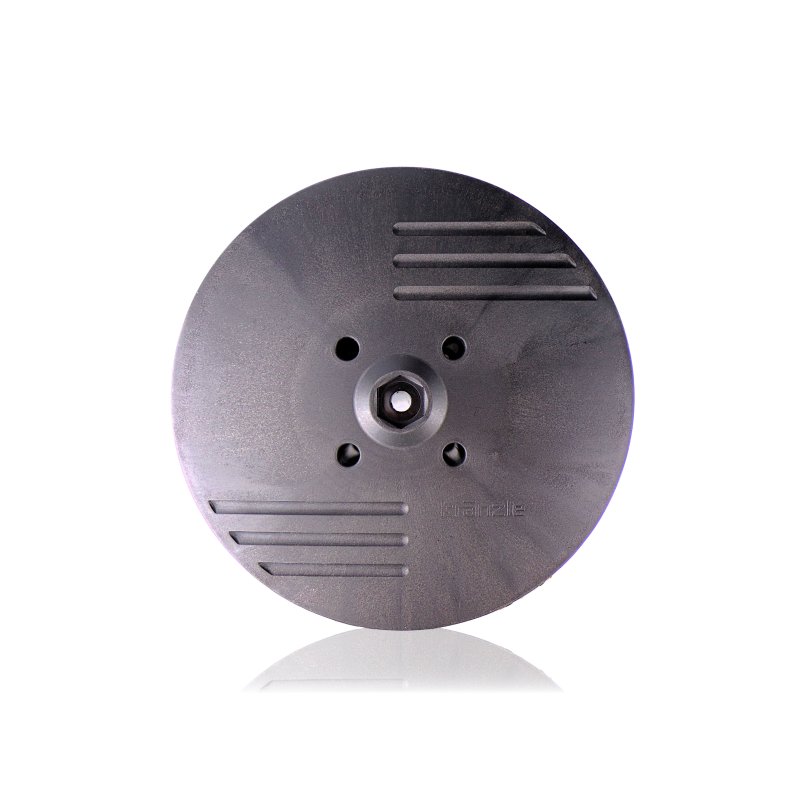
The crank side of a drum is more heavily loaded in practical use than the passive side of the reel. This is where torque appears during hose winding, hand pressure is applied, and repeated stresses occur with every turn. The side plate mounted on this side must therefore maintain the correct drum shape and cooperate stably with the manual winding mechanism.
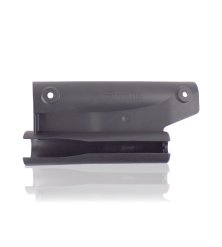
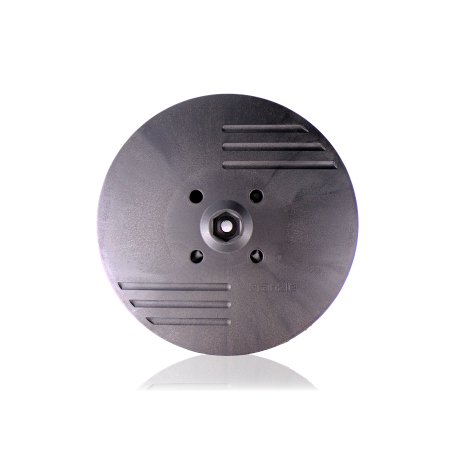
The side plate on the crank side works as a part of the hose drum that limits hose winding and forms the side geometry of the reel in the manually operated area. Its task is to keep the hose within the drum outline and ensure correct cooperation with the crank components, axle, and side mounting.
In service practice, this part is replaced after cracking, deformation, damage to seating points, or when the drum starts to work unevenly on the crank side. Damage to this plate may cause not only hose guidance problems, but also heavier crank operation, lateral drum wobble, or uneven hose arrangement during winding.
When selecting this part, the most important thing is confirming that it is the plate mounted on the crank side, not the component from the opposite side of the drum. In reels, both sides may look similar, but differ in mounting layout, profile, or the way they cooperate with the winding mechanism.
Before installation, it is worth checking:
Accurate fit matters because the part working on the crank side carries loads created during manual winding. An incorrect profile or wrong mounting side may cause misalignment, play, or heavy drum operation.
Compatibility should be assessed according to the specific drum design and the mounting side. Correct fit is determined by the geometry of the plate, its position in relation to the crank, the mounting layout, and the way it works with the reel axle. Similar diameter or similar appearance alone is not enough, because the crank-operated side may have different structural requirements than the opposite side.
[faq]
Why does the crank side require separate part verification?|Because in this area the plate works with the manual winding mechanism and is loaded during every crank rotation. The mounting side may therefore affect the profile, mountings, and seating method of the part.
Can heavy crank operation result from damage to the side plate?|Yes, especially if the plate is deformed, rubs against adjacent components, or causes the drum to run out of alignment. It is still worth checking the axle, spacers, and the crank itself as well.
What does drum wobble visible on the crank side mean?|It may indicate a bent plate, incorrectly seated part, play at the mounting point, or axle damage. The symptom is best assessed while turning the drum slowly without loading the hose.
Can the plate from the opposite side of the drum fit as a replacement?|Even if it looks similar, it may differ in mounting details or in the profile of cooperation with the crank mechanism.
What should be checked before tightening the drum after replacing the plate?|It is worth making sure that the axle is straight, the spacers are in the correct order, the crank turns without rubbing, and the hose lies between the plates without shifting sideways.
[/faq]
Model
K 1151 T
Model
K 1150 T
Model
K 205 T
Model
K 145 T
Model
K 175 T