

 Duża dostępność
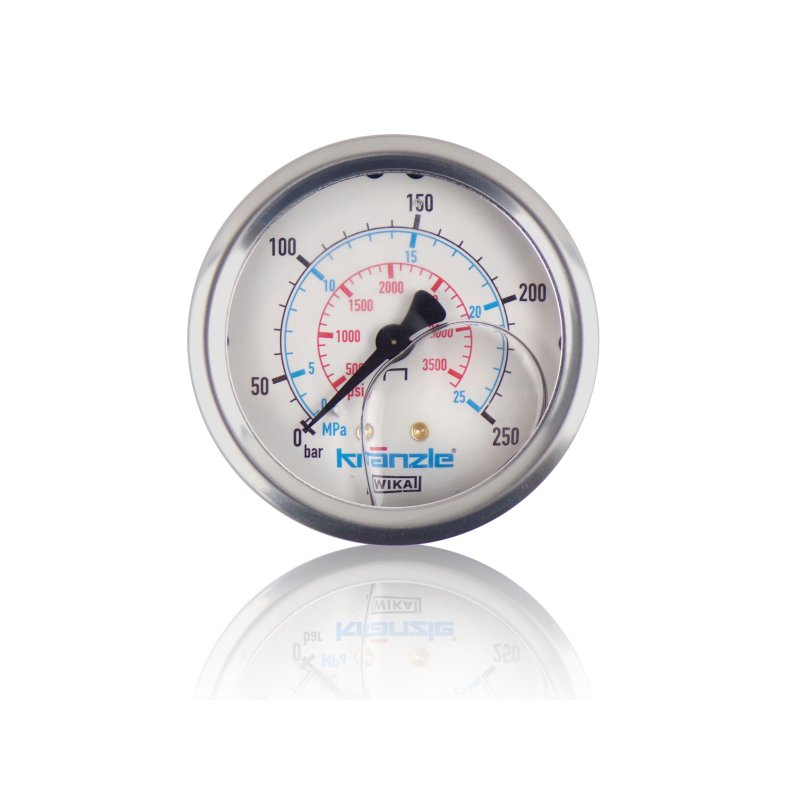
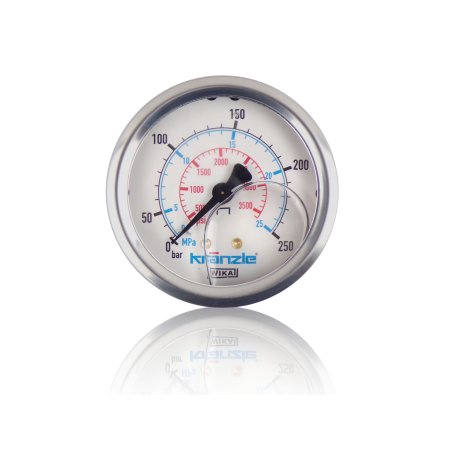
The 0-250 bar 1/4" pressure gauge is a measuring component used in the high-pressure systems of pressure washers for ongoing monitoring of operating pressure. In service and day-to-day use, it allows assessment of system performance, helps diagnose pressure drops, and supports monitoring of parameter stability during machine operation.
MPN / reference: 15039
Measuring range: 0-250 bar
The pressure gauge is used in typical service and operating work:
It is worth considering replacement of the pressure gauge when the following appear:
Selection of the pressure gauge should be unambiguous:
For measuring components, compatibility of the range and connection is critical for proper operation and clear readings.
The pressure gauge should be selected based on MPN 15039, the 0-250 bar range, and the 1/4" connection, according to the service documentation of the machine or component. The part should not be selected solely by appearance or the general description “pressure gauge for a washer”.
[faq]
Why does the 0-250 bar range matter when selecting a pressure gauge?|The measuring range should match the operating parameters of the system. Too low a range may overload the gauge, while too high a range may make accurate reading more difficult in the typical working range.
Is the 1/4" connection enough to be sure it will fit?|It is a very important parameter, but it is also worth checking the mounting method and comparing the removed part with the new one. The safest way is to confirm compatibility by MPN 15039.
Does a damaged pressure gauge affect only the reading, or also the washer’s operation?|Most often the issue concerns monitoring and diagnostics, but a leaking or damaged pressure gauge may also cause leakage at the mounting point and affect the tightness of the system.
How can I tell the difference between a pressure gauge failure and a real pressure problem in the washer?|If the readings are unstable, illogical, or the gauge is physically damaged, it is worth verifying the indicator itself first. In service practice, the reading is often compared with another working pressure gauge or the machine’s operating symptoms are assessed.
What should be checked after installing a new pressure gauge?|After installation, it is worth checking the tightness of the connection, readability of the reading, and whether the indications change smoothly and appropriately to the machine’s operation.
[/faq]
Model
1152 TST
Model
Profi-Jet B 10/200
Model
Profi 195 TST
Model
Therm 1525-1
Model
Therm-RP 1000 AT
Model
2160 TST
Model
Profi-Jet B 10/200 T
Model
Quadro 9/170 TST
Model
Profi-Jet B 170 T
Model
Therm-RP 1200 AT
Model
Therm 895-1
Model
1154 TST
Model
Therm-RP 1400
Model
Profi-Jet B 200 T
Model
Therm-RP 1400 AT
Model
Therm 1165-1
Model
Therm 602 E-M 18
Model
Therm-RP 1400 T
Model
Profi 15/120 TST
Model
Therm-RP 1600 AT
Model
X10/140 TST
Model
Therm 602 E-M 24
Model
Therm-RP 1200
Model
LX 2000
Model
E-Therm 500 M 18
Model
X8/150 TST
Model
Therm 602 E-M 36
Model
Therm-RP 1200 T
Model
LX 2500
Model
E-Therm 500 M 18 T
Model
Quadro 799 TST
Model
Therm 872 E-M 48
Model
HD 7/122 TS
Model
K 185
Model
E-Therm 500 M 24
Model
Quadro 599 TST
Model
Therm 635-1
Model
HD 9/80 TS
Model
K 125
Model
E-Therm 500 M 24 T
Model
Quadro 899 TST
Model
Therm 875-1
Model
HD 12/130 TS
Model
K 115
Model
E-Therm 603 M 36
Model
2175 TST
Model
K 1151 T
Model
Quadro 11/140 TST
Model
E-Therm 603 M 36 T
Model
E-Therm 873 M 36
Model
2175 TS
Model
Therm 870-1
Model
2160 TS
Model
E-Therm 873 M 36 T
Model
2195 TS
Model
K 1151
Model
1152 TS
Model
E-Therm 873 M 48
Model
2195 TST
Model
K 1150
Model
Therm-RP 1000
Model
E-Therm 873 M 48 T
Model
HD 10/122 TS
Model
K 1150 T
Model
Therm-RP 1000 T
Model
Profi-Jet B 13/150
Model
Profi 160 TST
Model
1132
Model
Therm-RP 1600 T
Model
Profi-Jet B 13/150 T
Model
Profi 175 TST
Model
Quadro 12/150 TST
Model
Therm-RP 1600
Maximum Pressure (bar)
250
Connector
1/4" Thread