Ostatnie sztuki!
The buffer tank works in an area that should remain protected from accidental ingress of dirt and from mechanical damage. The cover closes its upper section, organizes the enclosure, and secures a point which, during servicing, transport, and everyday use, is exposed to contact with water, dirt, and accessories.
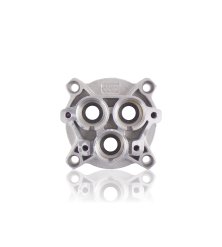
The buffer tank cover is used in pressure washers as a housing component associated with protection of the auxiliary tank. Its role is to close and protect this area so that the tank and its mounting zone do not remain exposed during operation of the unit.
In service practice, this part is most often replaced after cracking, breaking of clips, deformation of the edges, or loss of the old cover during a previous repair. A damaged cover may cause uneven seating, play in the tank area, or weaker protection against dirt. In workshop and industrial units, this matters because the tank area is exposed to dust, deposits, water, and frequent opening during servicing.
When selecting the cover, the most important thing is compatibility with the specific version of the buffer tank. The general part name alone is not enough, because correct installation depends on the shape, edge profile, seating method, and arrangement of mounting or snap-in points.
Before installation, it is worth checking:
Fit should be confirmed mechanically. A cover with a similar appearance but a different profile may fail to close the tank correctly or may sit with play.
Compatibility of this part should be assessed according to the design of the buffer tank and the way its upper area is closed. Fit is determined by the geometry of the cover, the contact points, and the mounting method to the specific housing. With protective elements, a similar shape does not guarantee full compatibility if the edge profile or clip layout is different.
[faq]
Does the buffer tank cover serve a technical function or only a protective one?|It mainly serves a protective and organizing function, but its absence or damage may increase the risk of dirt entering the tank area and may worsen closure of the housing.
What can cause play in the cover after installation?|The most common causes are broken clips, a deformed cover edge, a damaged seating area, or use of a part with a different profile than the original.
Does a cracked cover need replacement if it still sits on the tank?|If the crack does not affect holding force and seating, the issue may be mainly practical. However, if the part sits loosely, protrudes, or leaves the tank exposed, replacement is technically justified.
What should be checked when a new cover does not close evenly?|It is worth inspecting the tank edges, snap-in points, adjacent housing parts, and any deformation caused by earlier damage.
Can the cover be selected just by the name “buffer tank”?|No. The tank version, cover shape, and mounting method must be confirmed, because different housing versions may require different closing elements.
[/faq]
Model
Therm 1017 T
Model
Therm 1017