

 Mała ilość
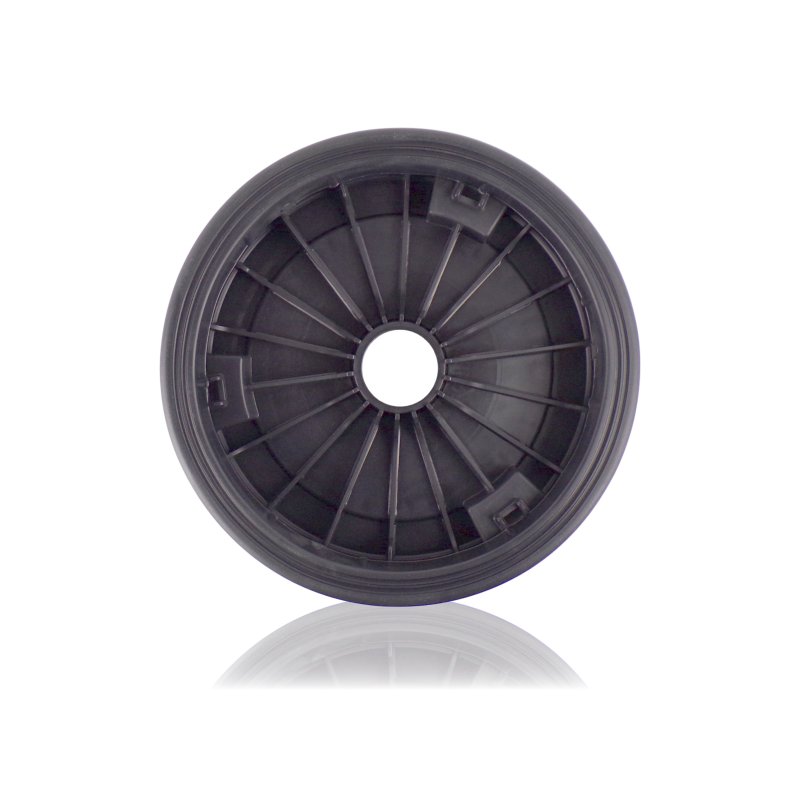
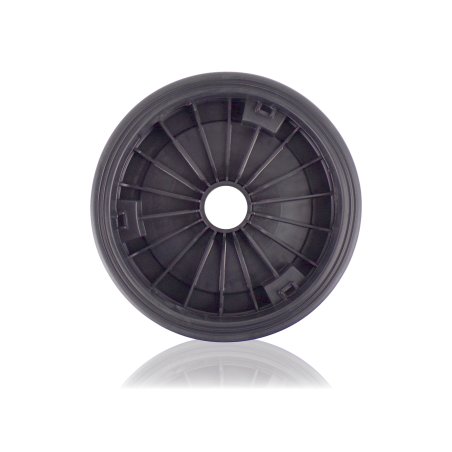
A wheel in a pressure washer is not an accessory, but a component that carries the weight of the entire unit every day. It determines whether the machine can be rolled easily around the workshop without jerking, tilting, or placing excessive load on the housing handles. In the 210 mm version, this is a wheel intended to work in a running gear assembly that must withstand not only the weight of the washer, but also uneven ground and frequent movement.
The 210 mm wheel works in the running gear system of the unit and is responsible for smooth rolling of the pressure washer across the floor, working yard, or service area. It is a wear part of particular importance in models that are regularly moved between workstations, loaded for transport, or used in workshop environments.
The input data indicates that the component may be used, among others, in the 1150 and 2000 series. In practice, such a wheel works not only with the axle, but also with washers, the wheel cover, and the support point of the whole unit. If the diameter or seating method is not correct, problems appear quickly: the washer becomes harder to move, develops play, or works unevenly during repositioning.
In the case of a wheel, what matters is not only the external size itself, but the entire way it works with the axle and the running gear assembly. Here, the basic parameter is the 210 mm diameter, but before installation it is worth also comparing the hub design, wheel width, and seating method with the removed part.
Before selection, it is worth checking:
With wheels, even a small dimensional difference may change the height of the unit, the amount of play on the axle, or the way the machine rolls. That is why it is best to treat the diameter as a starting point, not the only selection criterion.
This wheel should be selected for a specific running gear assembly, not only by the information that it “fits a pressure washer.” Compatibility is determined by the 210 mm diameter, hub design, and the way it works with the axle and the remaining mounting elements. Information about use, for example in the 1150 and 2000 series, should be treated as a practical indication, but the final fit is best confirmed by comparing the design of the old wheel and the mounting arrangement.
[faq]
Does the 210 mm diameter affect only the size of the wheel, or also the way the pressure washer operates?|It also affects how the unit is used. The diameter influences the installation height, the ease of overcoming uneven surfaces, and the overall smoothness of moving the pressure washer.
How can you tell that the wheel itself is worn, and not the axle or the mounting?|Most often by visible tread damage, cracks, deformation, or uneven operation of the wheel itself. If the play appears mainly on the axle, the problem may also lie in the mounting elements.
Can a damaged wheel affect the housing of the unit?|Yes. If the washer starts rolling unevenly or tilting, the loads are distributed differently across the handles, base, and mounting points of the running gear assembly.
When is it worth checking the second wheel as well, even if only one is damaged?|When the unit has been used for a long time under the same conditions. Wear on one side often means the other wheel also already has a worn surface or play in its seating.
What else is worth checking when replacing the wheel?|It is a good idea to check the condition of the axle, washers, wheel cover, and mounting point. A new wheel will work properly only if the rest of the running gear assembly is not worn or deformed.
[/faq]
Model
1152 TS
Model
1154 TST
Model
K 1151 T
Model
K 1151
Model
K 1150
Model
K 1150 T
Model
1152 TST
Model
1132
Model
2160 TST
Model
Quadro 12/150 TST
Model
2175 TST
Model
2175 TS
Model
2195 TS
Model
2195 TST
Model
Quickly
Model
Quadro 9/170 TST
Model
Quadro 11/140 TST
Model
2160 TS