

Authorised distributor
 Mała ilość
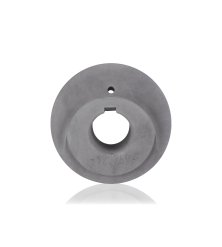
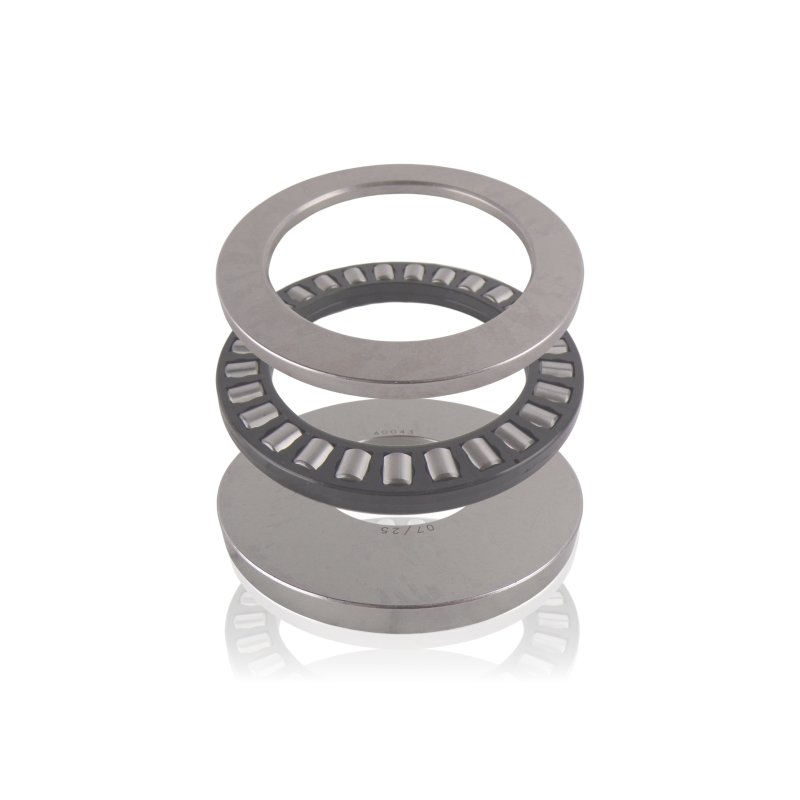
Set 40524 is a bearing pack for the cam of the Kranzle pressure washer pump, consisting of three components: a washer, a disc and a roller bearing. The pack is seated on the pump shaft together with the cam – the roller bearing rests against the working surface of the cam and transfers its motion to the pistons, while the washer and disc establish the correct axial position of the entire assembly. This is likely the same bearing pack that works with each of the four cam angle variants described earlier (9.5°, 10.8°, 12.0°, 12.75°) – however, this needs to be confirmed on the disassembled pump.
The pack is mounted on the pump shaft, directly next to the cam. The roller bearing rolls along the working surface of the cam with each rotation, transferring the swashing motion to the pistons in the cylinders. The disc and washer in the pack ensure correct axial alignment of the bearing relative to the cam – without this alignment, contact between the bearing and the cam would be uneven, accelerating wear of both components.
Replaced during cam assembly repair – most often together with the cam, when both components show shared signs of wear, or on its own when the cam is intact and the problem lies solely in the bearing.
Identify by reference number 40524.
When replacing the pack, always assess the condition of the cam it works with – both components wear together. If the cam shows visible signs of seizure or uneven race wear, replacing only the bearing pack without the cam rarely restores full assembly performance.
The three components of the pack (washer, disc, bearing) are sold as a single set under number 40524 – there is no need to source them separately, unless only one of them needs replacing while the other two remain intact.
How to distinguish whether pump noise or vibration comes from the bearing pack or from the cam itself?|After disassembly, separate the two components and check each individually. Rotate the roller bearing by hand outside the pump – grating, resistance or noticeable play indicate its wear regardless of the cam's condition. Examine the cam in raking light – dull wear, scoring or pitting on the race indicate its wear regardless of the bearing's condition. Often both components wear together, but a separate assessment avoids unnecessarily replacing a sound component.
Can the washer or disc from pack 40524 be replaced individually if only the bearing is damaged?|Set 40524 is sold as a complete set of three components. If on disassembly the washer and disc are in good condition and only the bearing is damaged – replacing the bearing alone could theoretically be considered, provided it is available as a separate part. In practice, with the cam assembly already open, the cost of the entire pack is usually small compared to the labour cost of a second disassembly a few months later if the remaining components turn out to wear faster than expected.
What role does the disc play in the pack if the roller bearing alone would be sufficient to transfer motion from the cam?|The roller bearing transfers rotary-swashing motion from the cam surface, but it needs a stable, flat thrust surface on its other side – this is the function of the disc. Without the disc, the bearing would rest directly against another structural component, which could lead to uneven pressure and accelerated wear. The disc distributes this pressure evenly, analogous to the pressure discs used in the piston spring assembly.
How to tell that the bearing pack was poorly seated during a previous assembly, even if all components are physically intact?|Check the wear marks on the cam – uneven wear concentrated in one sector of the race suggests the bearing was not contacting the cam surface evenly around its full circumference, usually resulting from incorrect seating of the pack during assembly. Also check whether the washer and disc lie flat with no axial play once assembled on the shaft – any perceptible movement along the axis indicates insufficient seating. When reassembling, tighten according to the proper torque for the connection, if specified in the documentation.
[/faq]
Model
WS 1200 TS
Model
Primus 1000 TST
Model
Therm 895 ST
Model
Primus 1000 TS AT
Model
Therm 1165 ST
Model
Primus 1200 TST
Model
Primus 1200 TS AT
Model
Bully 1000
Model
Bully 1200
Model
Therm 1165
Model
Bully 980 TS
Model
Bully 980 TST
Model
Quadro 1500 TS
Model
Quadro 1000 TST
Model
Quadro 1500 TST
Model
Quadro 1200 TST
Model
WS 800 TS
Model
Therm 895-1
Model
Bully 1180 T
Model
Therm 1165-1
Model
Bully 1180 TST
Model
Quadro 800 TST
Model
Therm 1525-1
Model
Quadro 1000 TS
Model
WS 1000 TS
Model
Quadro 1200 TS