

 Duża dostępność
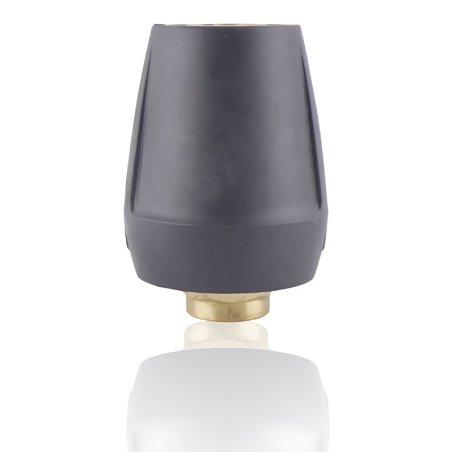
The D10 – M12×1 quick coupling socket is a connection part where the quick-coupling side works in the D10 standard (socket), while the other side has an M12×1 thread. This type of part is used in systems where accessories need to be connected and disconnected quickly without screwing threads on and off every time, while maintaining repeatable sealing performance.
MPN / reference: 13431
Type: D10 quick coupling socket
Thread: M12×1
Application according to description: Home series (including 1050 P / 1050 TS / 1050 TST).
The socket is used in typical service and assembly work:
Replacement of the socket is justified when you notice:
Choose it based on matching parameters:
With D10 quick couplings, matching the standard is critical - “similar” parts (D10/D12) are not interchangeable and can create symptoms that look like wear, even though the real issue is incorrect selection.
The socket should be selected by MPN 13431 and compatibility of the D10 standard and M12×1 thread with the specific accessory. The reference to the Home series (1050 P / 1050 TS / 1050 TST) indicates the application area, but safe selection is best confirmed by the removed part and the type of the mating end (D10 plug).
[faq]
How can I tell a D10 socket from a D10 plug without measuring?|A socket is the “receiving” part - the plug is inserted into it and locked by a latch. If the part in your setup has an opening and a retaining mechanism, it is usually the socket.
Can D10 be connected to D12 because it looks similar?|No. The standards differ in the geometry of the working parts. Trying to connect D10 with D12 results in play, leakage, or lack of full latch engagement.
What most often causes leaks at a quick coupling: the socket or the plug?|It depends on wear. If the plug is scratched or worn, it can also leak. In practice, both parts should be checked, but the socket is often more commonly worn due to dirt and frequent reconnecting.
Can a damaged M12×1 thread indirectly cause leakage at the quick coupling?|Yes. If the socket does not sit axially or has play on the thread, it may work at an angle and lose sealing on the quick-coupling side.
What should I check after replacing a D10 socket?|Check whether the plug goes fully in and locks clearly, whether the connection has no play, and whether after a short pressure test there is no “sweating” at the coupling. It is also worth cleaning both the plug and socket from sand/dust - this is the simplest way to extend quick-coupling life.
[/faq]
Connector
QuickConnector D10
Connector
M12x1 Thread