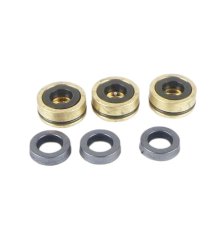
Duża dostępność
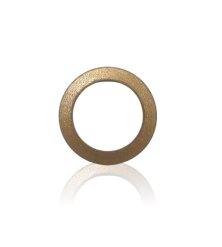
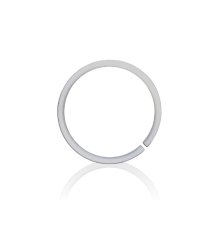
The 2.8×2.6 mm O-ring is a ring seal used in small seats and hydraulic connections of pressure washers, where precise fit to the groove and stable sealing under load are critical. In service, it is replaced when micro-leaks occur, after a connection has been dismantled, or when the seal loses elasticity and no longer provides proper squeeze.
MPN / reference: 121361
Size: 2.8×2.6 mm
The O-ring is used in typical service work:
Consider replacing the O-ring when you notice:
Selection should be very precise:
With small seals, tolerances are critical - even a slight cross-section difference often causes an immediate leak or makes installation difficult.
Select the O-ring based on MPN 121361 and the 2.8×2.6 mm size, according to the parts list for the specific subassembly or by comparison with the removed part. Don’t choose a substitute “by eye” - in small seats, dimensional differences matter a lot.
[faq]
Is it easy to damage such a small O-ring during installation?|Yes. The most common issues are cutting it on a sharp edge, twisting it in the groove, or pressing it into a dirty seat. That’s why a clean seat and straight (axial) assembly are important.
How do I know 2.8×2.6 mm is the correct size and not, for example, 3.3×2.4?|Most reliably by MPN 121361 and by comparing the removed seal and the groove. The differences may look small, but in practice they change squeeze and sealing.
What does it mean if the joint “sweats” only at higher RPM/heavier load?|It often indicates a micro-leak that shows up only under higher pressure or pulsation. In that case, check O-ring fit and the condition of the seat/groove.
Is it worth replacing the O-ring preventively every time the joint is dismantled?|In many service tasks, yes. After compression an O-ring can flatten and seal worse when reused, especially in small seats.
How can I quickly verify correct installation after replacement?|After assembly, perform a functional test and observe the joint under pressure. No moisture and stable system operation usually confirm the seal is seated correctly.
[/faq]
Model
Bully 1000
Model
Bully 1200
Model
Quadro 1000 TST
Model
Therm 895
Model
Quadro 1200 TST
Model
Therm 1165
Model
Therm 895-1
Model
Therm 602 E-M 18
Model
Therm 1165-1
Model
Therm 602 E-M 24
Model
Quadro 800 TST
Model
Therm 602 E-M 36
Model
Therm 1017 T
Model
Therm 872 E-M 48
Model
Therm 1017
Model
Quadro 1000 TS
Model
Therm 635-1
Model
Quadro 1200 TS
Model
Therm 875-1
Model
Profi-Jet B 10/200
Model
Therm 715
Model
Profi-Jet B 10/200 T
Model
Quadro 1500 TS
Model
Profi-Jet B 16/220
Model
Quadro 1500 TST
Model
Profi-Jet B 16/220 T
Model
Therm 895 ST
Model
Profi-Jet B 20/200
Model
Therm 1165 ST
Model
Profi-Jet B 20/200 T