

 Duża dostępność
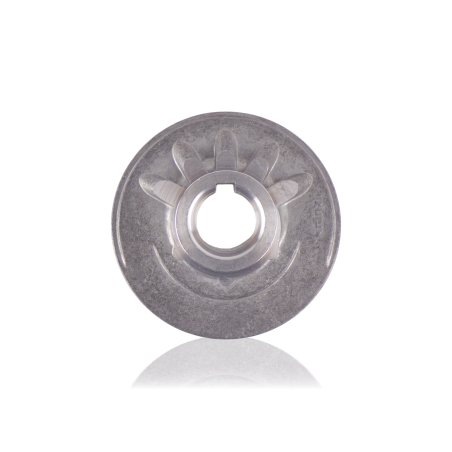
Cam 4102896 with an angle of 9.6°, made of aluminium, is a drive component of the Kranzle 1152 TS/TST pressure washer pump in the version without throttle. Mounted on the pump shaft, with a thrust bearing pack underneath it and the pump housing further down. The rotary motion of the motor turns the cam – its 9.6° angle generates the motion transferred through the bearing onto the pump pistons, converting shaft rotation into their reciprocating movement. The aluminium body distinguishes this component from the steel cam variants used in other Kranzle pump series.
The cam is mounted on the shaft of the 1152 TS/TST pump. With each shaft rotation, the cam, set at a 9.6° angle, moves the pistons via the thrust bearing resting against its surface. The 9.6° angle determines piston stroke, and through that, the flow rate and pressure characteristics of the pump. Intended for the pump version without throttle – do not use in pumps with a throttle, where a different cam variant is required.
Replaced during cam assembly repair – after identifying wear on the cam surface, damage to the thrust bearing, or as part of a comprehensive 1152 TS/TST pump drive overhaul.
The key distinction is the version with or without throttle – a throttle is a component restricting flow or pressure at a specific point in the pump's hydraulic circuit. Before ordering, confirm on the disassembled pump whether a throttle is present in the hydraulic circuit – its presence or absence is a design feature of the specific unit, not the result of service work.
The 9.6° angle is close to the 9.5° angle used in the AQ pump (cam 4052395) – these are two different parts for different pump series. They are not interchangeable even at this minimal angle difference.
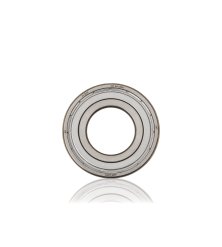
Identify by reference number 4102896. During disassembly, assess the condition of the bearing pack at the same time – both components work together and wear over a similar timeframe.
Cam for the Kranzle pressure washer pump, angle 9.6°, version without throttle, aluminium body. Verify the exact compatibility range by reference number 4102896.
Are the 9.6° cam (4102896) and the 9.5° cam (AQ cam 4052395) practically the same component?|No – these are two different cams for different pump series. The 0.1° angle difference results in a minimally different piston stroke, but more importantly both cams have different shaft mounting geometry and may have different external dimensions. The series number (41028 vs 40523) and pump model (1152 TS/TST vs AQ) are different – substitution is not permissible even at this seemingly minimal angle difference.
How to identify early wear of an aluminium cam before noticeable vibration appears?|Aluminium is softer than steel, so early race wear appears sooner as dull, slightly concave marks at the bearing contact point – before scoring develops. Examine the race in raking light after removing the bearing pack. Also check whether the thrust bearing rolls evenly along the race when turned by hand – resistance or grating indicates damage to one of the components. With an aluminium race in contact with a steel bearing, also check for signs of galvanic corrosion at the contact points – water or moisture in this area accelerates wear at the direct metal-to-metal interface.
[/faq]
Model
1152 TST
Model
1152 TS