

Authorised distributor
 Ostatnie sztuki!
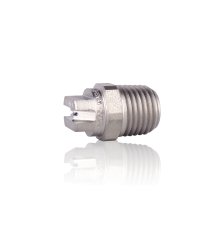
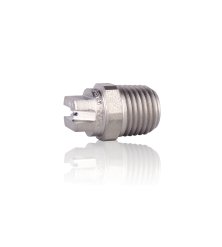
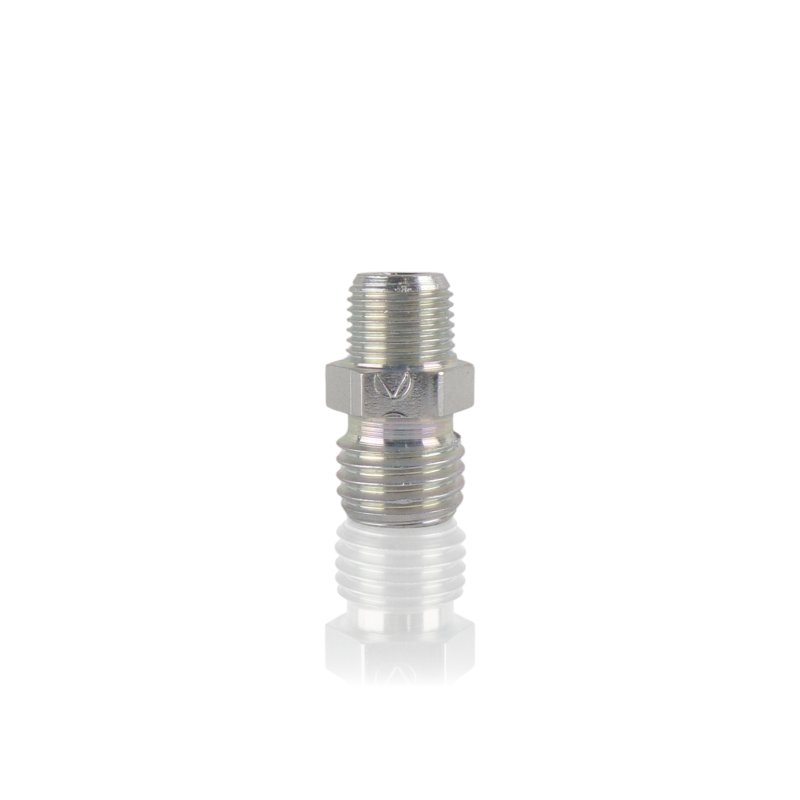
Nipple 405911 is a straight zinc-plated Ermeto hydraulic fitting connecting the valve block to the Kranzle pressure washer pump. On the valve block or pump side it screws in with an external taper thread R1/8" (BSPT); on the hydraulic line side it accepts a 6mm tube via an Ermeto fitting with M12x1.5 thread. The zinc coating provides corrosion protection in the working environment of the pressure washer – with constant contact with water and detergents.
The nipple is mounted between the valve block and the pump as a hydraulic connection element transmitting water under working pressure. The R1/8" taper thread seals on the thread itself when tightened – without an additional face seal, which is the characteristic feature of BSPT taper threads. The Ermeto 6mm side connects the nipple to a metal hydraulic tube with a 6mm external diameter, where M12x1.5 is the thread of the Ermeto nut pressing the ferrule onto the tube against the nipple body.
Replaced when the thread is damaged, the connection leaks, or body corrosion exceeds what can be remedied.
Four parameters must match simultaneously: fitting type Ermeto (straight, not angled), external taper thread R1/8" on the block side, tube size 6mm and Ermeto nut thread M12x1.5. Changing any one of them means a different part.
Most common ordering mistakes:
R1/8" taper (BSPT) vs G1/8" parallel (BSPP) – both have an identical thread pitch and nearly identical external diameter, but differ in taper angle. A BSPT taper thread screwed into a BSPP parallel bore will not seal correctly even with PTFE tape. Before ordering, check the thread type in the valve block bore – with a taper thread the fitting enters progressively tighter after a few turns; with a parallel thread the resistance is uniform throughout.
Straight vs angled fitting – Ermeto 6mm is available in straight and angled versions (90°, 45°). Nipple 405911 is the straight version – if the installation geometry requires a change of tube direction, a different part is needed.
Identify by reference number 405911 or the full designation R1/8" AG conical × Ermeto 6mm (M12x1.5).
Hydraulic connection component for Kranzle pressure washer pumps. Block thread: R1/8" external taper (BSPT). Line connection: Ermeto 6mm, nut M12x1.5. Type: straight Ermeto fitting, zinc plated. Verify the exact compatibility range by reference number 405911.
What is an Ermeto fitting and how does it differ from a plain nipple with threads on both sides?|An Ermeto fitting (EO system – Ermeto Original) is a hydraulic metal tube connection system in which the seal is achieved by mechanical deformation of a ferrule on the tube when the nut is tightened. Unlike threaded fittings on both sides, Ermeto does not require a thread on the tube itself – a cleanly cut 6mm tube end with no thread preparation is sufficient. An Ermeto connection is repeatedly dismantleable and maintains a seal at the high working pressures typical of pressure washer pumps.
How does taper thread R1/8" differ from parallel G1/8", and how to check which is in the valve block?|BSPT taper thread (R) seals on the thread flanks through their deformation when tightened – the fitting enters progressively tighter with each successive turn. BSPP parallel thread (G) has a constant diameter throughout and requires a face seal or O-ring. When screwing in a fitting without a seal: if it becomes noticeably tighter after 2–3 turns – taper thread; if resistance is uniform to the end – parallel. Never fit a taper thread without PTFE tape or hydraulic thread sealant.
Should PTFE tape, paste or nothing be used when fitting the R1/8" taper nipple?|An R1/8" taper thread seals through thread deformation, but in pressurised water systems PTFE tape or hydraulic thread paste is recommended as additional sealing and as a lubricant to ease assembly. Wrap PTFE tape in the direction of the thread – 2–3 layers are sufficient. Do not wrap the tape too thickly on a taper thread, as this can distort the sealing geometry and make disassembly difficult. Hydraulic thread paste is a more convenient alternative, particularly for restricted-access connections.
What does zinc plating mean for a hydraulic fitting and how long does it protect against corrosion in washer operating conditions?|Zinc (passivated) means electrolytic zinc plating with passivating chromate treatment, giving a protective layer of a few to several tens of micrometres. In pressure washer conditions – constant contact with water, detergents and varying temperatures – zinc protection lasts several to over ten years under normal use. The first signs of corrosion are a white oxide film on the surface (zinc corrosion), before rust appears on the base steel. With permanent immersion in water or contact with aggressive cleaning agents the coating life is shorter – check the nipple body condition at every pump service.
How to safely remove a nipple from the valve block if it is heavily seized, without damaging the thread in the block?|Before removal, soak the connection with penetrating fluid and wait several minutes. Use a flat or socket wrench that is a close fit to the nipple hex – an oversized key will slip and damage the hex edges. With a heavily seized nipple, tap the body gently through a soft pad to help vibration break the deposits. Do not use a torch on valve block components – plastic seals nearby may be damaged. If the hex is already damaged, use a damaged-nut extractor or self-locking pliers – with protection on the body to avoid scoring the thread.
[/faq]
Model
Therm 895
Model
Therm 1165
Model
Profi-Jet B 230 T
Model
Profi-Jet B 240 T
Model
Profi-Jet B 270 T